



Elecnor promotes the use of drones to enhance security in its infrastructure projects
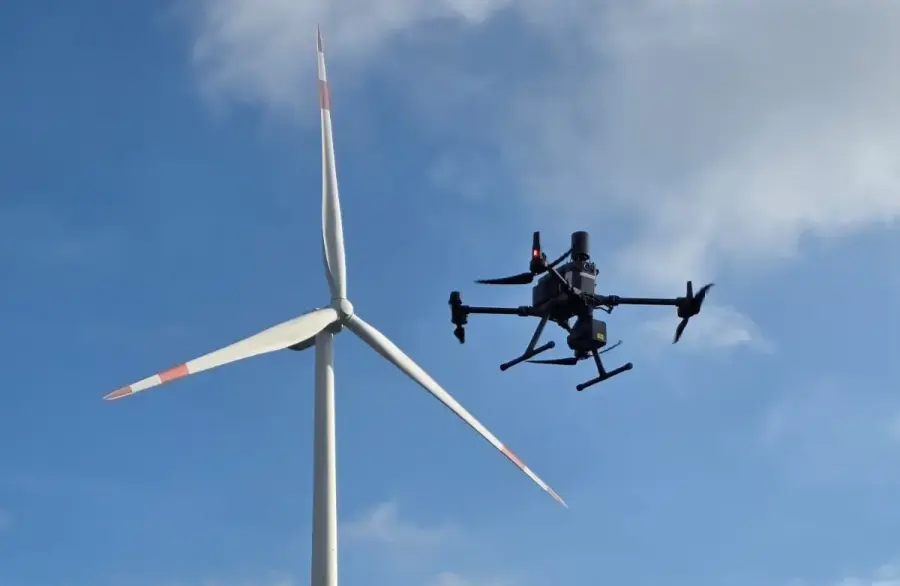
In complex environments, safety is a non-negotiable commitment. In this context, the company has consolidated the use of drones as a support tool in energy, industrial, and transport infrastructure projects. This is a solid commitment to the development and integration of drones in its projects with the aim of achieving greater operational efficiency, improving data acquisition, and, above all, reinforcing the safety domain.
Elecnor's drone and surveying department was consolidated in the first quarter of 2020 and currently operates a fleet of ten proprietary equipment, mainly composed of DJI brand drones, with the exception of the fixed-wing EBEE model, and managed by specialized company personnel. Grupo Elecnor is already working on the development of a project aimed at generating virtual reality environments from data captured by drones, which will open up new possibilities in work planning, training, and facility analysis.
Among the models used are the DJI Flycart 30, used for material transport and guide rope laying; the DJI Matrice 350 RTK, equipped for LiDAR scanning and RGB image capture; the DJI Matrice 600 Pro, used in guide rope laying operations; and the DJI Air S2 and Air S3 models, intended for video recording and photography. Added to these is the EBEE Plus S, specialized in photogrammetry work.
The current value of the drone and surveying department's equipment amounts to 121,850.78 euros, excluding specialized software, processing equipment, or operational vehicles. The objective is to continue advancing in this direction and develop internal capabilities, both in technical resources and specialized personnel, to expand the range of applications.
Reducing Risk Exposure
Many activities related to electrical, energy, or railway infrastructure involve working at heights or in difficult-to-access areas. Thanks to the use of drones, it is possible to carry out aerial inspections, high-precision mapping, or real-time supervision without the need to expose teams to potential accidents or risky situations.
This approach, in addition to reducing the need for direct interventions in risk areas, also allows for anticipating incidents and planning each operation with greater precision, prioritizing the safety and health of all involved. The information obtained through sensors, image acquisition systems, or LiDAR scanning facilitates the early detection of structural or technical anomalies and contributes to improving coordination between technical and prevention teams.
A Significant Advance in the Regulatory Framework
In September 2025, Elecnor obtained the Authorization Regime for operations with heavy drones, a certification that allows operating equipment weighing over 25 kilograms in critical tasks such as material transport or guide rope laying. According to the company, it is the first operator in Spain to obtain this authorization, which it currently shares with only one other company in the sector.
The operation of this equipment requires specific training. Elecnor pilots have specialized training provided through Dronics, an entity certified by the State Aviation Safety Agency (AESA), which authorizes them for this type of operation.
In the operational field, Elecnor also participated on September 27, 2025, in a pilot test with AESA during the grape harvest in Ribeira Sacra (Galicia), contributing its experience in cargo transport using drones.
The use of drones allows the company to perform tasks such as laying pre-pilot ropes on power lines, transporting work materials, visual inspection of infrastructure, or photogrammetry work, facilitating the collection of technical data and improving the planning of field interventions.
Looking ahead to 2026, Elecnor plans to continue expanding these operational capabilities. Among the department's objectives are obtaining the PDRA authorization, the LUC certification, which would allow self-approval of certain operations, and expanding authorizations to release transported loads without manual delivery. Likewise, the company is analyzing the possible incorporation of the DJI T100 model, which would increase operational capacity, and is considering the incorporation of new specialized pilots.
The incorporation of these technologies is part of Elecnor's strategy of innovation and continuous improvement, aimed at reinforcing the safety of work teams, preventing any type of occupational accident, and optimizing the execution of infrastructure projects in increasingly complex environments.