



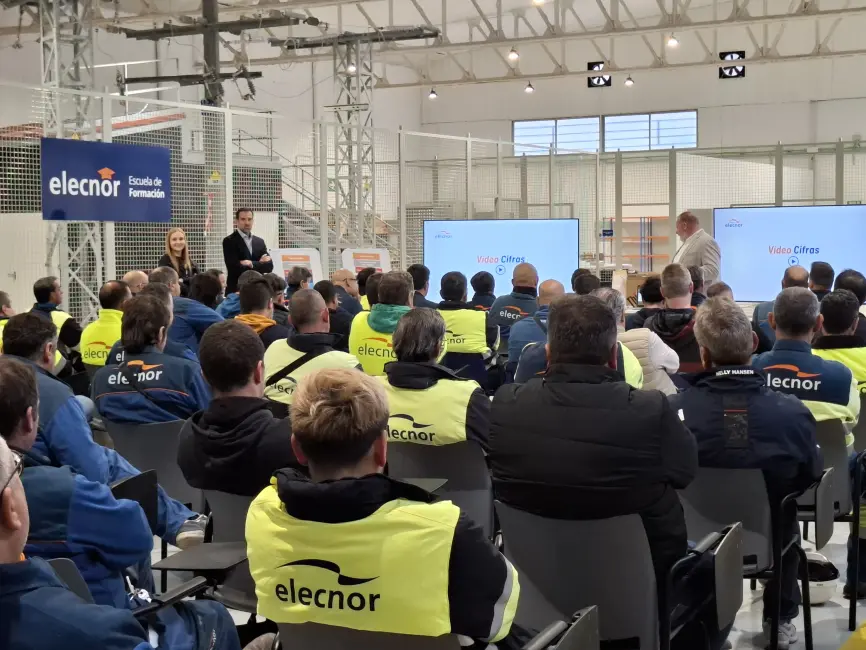
Grupo Elecnor prevents workplace accidents through a data-driven safety model
Occupational safety is one of Elecnor Group’s strategic pillars. With the aim of continuing to move toward the goal of “zero accidents,” the company has allocated more than 80 million euros in recent years to occupational risk prevention (ORP) initiatives, consolidating a preventive approach supported by technology, data, and continuous improvement.
In this context, Elecnor Group is promoting a new data-driven prevention model that makes it possible to anticipate risks, make informed decisions, and enhance the protection of its teams across all work environments.
Digitalization of prevention: key ORP tools
The Group has digitalized its main safety management processes and tools, laying the foundations for a more intelligent, consistent, and effective ORP model:
Segurt
Corporate tool for planning and recording field safety inspections. It facilitates the monitoring of working conditions, the correct use of PPE, and the verification of procedures, generating real-time evidence.
Main Risk Permits (PRPs)
A digital system for authorizing critical work (work at height, live-line work, confined spaces, etc.). It ensures that risks have been properly identified and that preventive measures have been applied before starting the activity.
Notific@
A platform for communicating and recording accidents, incidents, risk-related stoppages, and improvement ideas. It turns daily field experience into valuable information to enhance prevention.
Thanks to these systems, Elecnor centralizes millions of data points each year—essential for strengthening analysis and decision-making.
Core
A comprehensive tool that, by receiving information from the aforementioned applications and other sources, manages the transversal processes of the Management System. It allows them to be carried out quickly and efficiently, reducing administrative burden and generating concrete actions that improve daily safety.
In 2024, the company recorded:
- 346,100 PRPs
- 95,050 safety inspections
- 79,600 corrective measures
- 680 internal worksite audits
These indicators reflect a solid preventive commitment and a safety culture increasingly embedded within the organization.
Big Data and Artificial Intelligence applied to occupational safety
Digitalization has enabled Elecnor Group to develop Big Data, advanced analytics, and Artificial Intelligence projects applied to ORP, with three main goals:
- Identification of risk patterns: Analyzing which types of projects, tasks, or contexts present higher concentrations of incidents or deviations, allowing emerging risks and trends to be identified.
- Prioritization of preventive actions: Defining where to audit first, which teams require reinforcement, which areas need greater supervision, and which processes should be reviewed.
- Detection of improper use of applications: Using algorithms and Big Data techniques, possible misuse of digital tools by users can be detected, allowing action to strengthen usage and improve safety and health on site. Machine Learning techniques also analyze the quality of photos submitted as evidence, ensuring they are adequate.
- Improvement of safety training: Designing training content based on real data, focused on scenarios and behaviors with greater impact on safety. Elecnor also incorporates virtual reality to train teams in critical situations safely and effectively.
Commitment to safety: technology serving people
The use of data in prevention has enabled a shift from reactive to proactive and predictive prevention, supporting decisions with objective indicators and strengthening the safety culture with the idea that every data point can prevent an accident. Through the digitalization of tools such as Segurt, PRPs, and Notific@, along with the incorporation of Big Data and AI, the Group consolidates a more advanced, efficient, and people-centered occupational safety model, moving ever closer to the “zero accidents” objective.